Econergy connects 120MWh Dalmarnock battery in Glasgow to UK grid
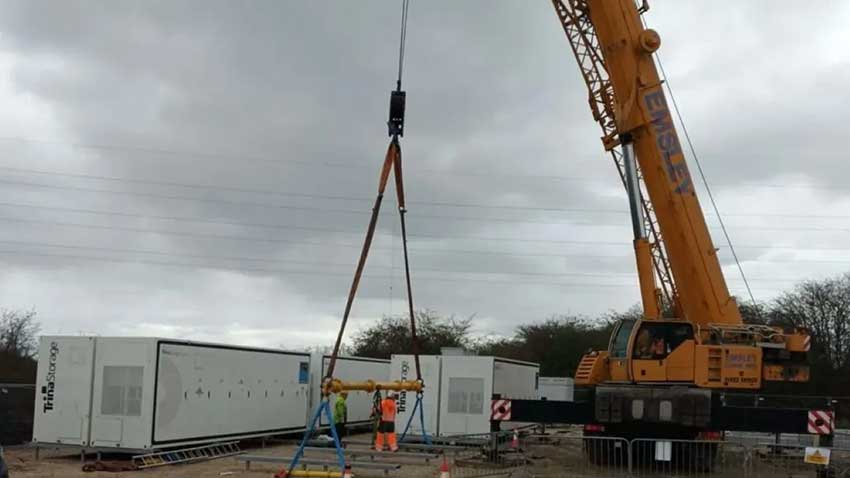
Econergy has connected its 40MW/120MWh Dalmarnock battery energy storage system in Glasgow to the UK grid, the renewable energy group said, with full commercial operation expected by December 2026.
The project is the second battery storage system the company has connected in the UK, following the 50MW/100MWh Swangate project, which connected in 2024.
Econergy, which describes itself as a European renewable energy independent power producer, said the Glasgow site would provide flexibility to the regional electricity system by storing power and dispatching it in response to market conditions.
Dalmarnock is backed by a project financing agreement of about £21m with Santander UK. Econergy announced financial close on the project in January, when Santander said Dalmarnock was the first three-hour duration asset it had funded.
The company has also entered a 10-year floor agreement with EDF, which Econergy said provides a minimum annual revenue together with an additional revenue-sharing mechanism. EDF has been chosen to optimise the asset, according to Econergy.
At the time of financial close, Econergy chief executive Eyal Podhorzer said the arrangement with Santander and EDF gave the company long-term revenue visibility while keeping exposure to upside in the UK market.
Joshua Murphy, director of energy storage at Econergy, said: “We are delighted to have connected Dalmarnock to the grid. We finalised the development, financed and delivered the project, and are now bringing it into operation.”
He added: “With a three-hour duration, the system is designed to absorb surplus renewable generation and discharge during peak demand.”
On the EDF arrangement, Murphy said: “We have chosen EDF to optimise the asset and our agreement with them provides a 10-year revenue floor while preserving exposure to upside through revenue sharing.”
Dalmarnock forms part of what Econergy describes as a storage-led UK portfolio of about 2.2GW. Four further UK projects are under construction, the company said.
The first is Immingham, an 80MW/240MWh scheme financed on the same Santander and EDF structure, with grid connection expected in 2027. The other three form a portfolio totalling 160MW/500MWh, which Econergy expects to connect between 2027 and 2028.
Government plans set out a target range for grid-scale battery capacity. The Clean Power 2030 Action Plan sets a range of 23GW to 27GW of battery capacity by 2030, compared with 6.8GW in 2024, according to the Clean Flexibility Roadmap published by the Department for Energy Security and Net Zero.
In Scotland, about 0.5GW of battery storage capacity was operating at the end of September 2025, with about 2.7GW granted permission and awaiting construction, according to the Scottish Government’s battery energy storage policy page. The Scottish Government published planning guidance for battery projects in March 2026.
State-backed investment has also gone into the sector. In August 2025 the National Wealth Fund committed up to £200m to battery developer Eelpower, alongside Equitix and Aware Super, with the investment intended to deliver at least 1GW of capacity.
Murphy added of the Glasgow project: “I’m excited to start seeing the first commercial operation of this asset after a successful project delivery!”