Sustainable Homes Must Also Be Safe: Help for Seniors Warns on Hidden Risks in Green Retrofits

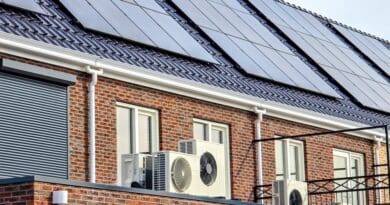
The drive to decarbonise Britain’s housing stock is transforming how many older people live, with solar panels, heat pumps and high‑performance insulation now common features in family homes.
An advocacy group is warning, however, that the push towards sustainable energy must go hand in hand with careful attention to basic safety for older residents.
Help for Seniors says that while low‑carbon technologies can reduce bills and improve comfort, the way they are integrated into existing properties can inadvertently increase day‑to‑day hazards for people in later life. Its recent polling found that more than half of adults with retirement‑age parents have already made or recommended adjustments to their parents’ homes to make them safer, underlining how families are quietly compensating for design decisions that did not fully anticipate ageing.
According to the advocacy group, the most common risks remain familiar: falls, trips and difficulties moving around. In homes that have undergone extensive retrofit for energy efficiency, these risks can be heightened by new thresholds, boxed‑in pipework or raised floors created to accommodate insulation and services. Air‑tightness measures may lead to heavier doors, while new plant such as hot‑water cylinders or battery storage systems can add clutter to circulation routes if not carefully located.
Bathrooms and stairs are still the highest‑risk areas. Slippery hard surfaces, a lack of grab rails and low toilet seats make bathrooms a frequent site of serious falls for older occupants. On stairs, poorly lit treads, inconsistent riser heights and the absence of continuous handrails are long‑standing problems that can be exacerbated when layouts are altered for mechanical and electrical upgrades or when solar and battery controls are added to landings and under‑stairs spaces.
Kitchens, often redesigned as part of low‑carbon refurbishments, bring a cluster of potential hazards. Induction hobs, high‑efficiency ovens and new hot‑water systems can improve performance but still need to be set within clear, uncluttered worktops with adjacent landing spaces to reduce the risk of burns. Overloaded sockets, trailing appliance cables and poorly planned storage – particularly units that require stretching or bending – remain common issues regardless of how efficient the equipment itself may be.
Lighting is another area where sustainable design and safety intersect. Energy‑efficient fittings and controls, including motion sensors and dimming systems, can significantly reduce consumption but must be tuned to provide sufficient, even illumination for older eyes. Deep shadows on stairs, glare from bright point sources and slow‑to‑activate sensors can make movement more difficult, especially at night. Good schemes use efficient LEDs, but distribute light carefully along corridors, at changes of level and over work surfaces.
“In many homes, the fabric and services are being upgraded for good reasons, but details that matter to someone in their seventies or eighties can get lost along the way,” says Nathan Cook of Help for Seniors. “Simple questions – Is this route clear? Is there a secure handhold? Is the lighting even? – make a big difference to how safely an older person can live with new technology.”
Help for Seniors, whose broader advice is available through the organisation’s resources, recommends that architects and homeowners consider safety and sustainability together from the outset of any project. Practical measures include keeping plant rooms and storage batteries away from main walkways, maintaining level or gently ramped transitions where floors are raised for insulation, and ensuring controls for heating, ventilation and renewable systems are mounted at comfortable heights with clear labelling.
The group also stresses the importance of traditional good practice: removing or securing loose rugs, providing continuous handrails on both sides of stairs, improving lighting in circulation areas and keeping frequently used items at waist height. For older people living alone in upgraded homes, discreet personal alarms or call devices remain an important back‑up should a fall occur.
For designers and clients pursuing net‑zero ambitions, the message from Help for Seniors is that a truly sustainable home is one that older residents can use safely and confidently as well as efficiently. By viewing energy performance, accessibility and fall prevention as parts of the same brief, projects can deliver homes that are not only low‑carbon, but also genuinely supportive of independent living in later life.