Rise of the zero-bill home? Ed Miliband pins hopes on solar power
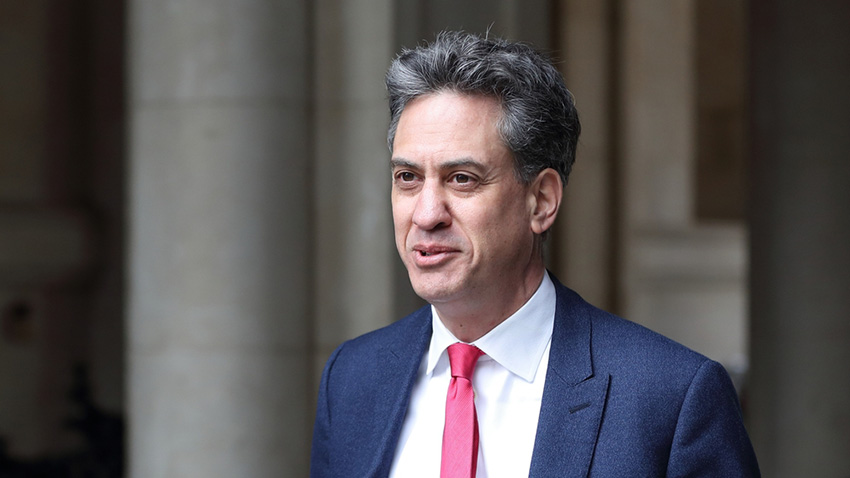
The government is pinning its hopes on a mass rollout of solar power, heat pumps and battery storage to create a new generation of so-called “zero-bill” homes, as it seeks to prove that green energy can deliver tangible savings for households.
Under plans being developed by Ed Miliband, millions of homeowners would become eligible for grants to install solar panels, heat pumps and home batteries, funded through a £13 billion programme over the next four years. The proposals will form the centrepiece of a forthcoming Warm Homes Plan aimed at cutting carbon emissions from Britain’s 30 million homes while easing pressure on household energy bills.
In a notable shift in emphasis, ministers are moving away from a strategy focused primarily on insulation and instead doubling down on domestic power generation and storage. Officials believe that combining rooftop solar with batteries and heat pumps is the fastest and most cost-effective way to reduce bills, with some well-insulated homes potentially paying little or nothing for electricity.
Solar power has emerged as the cornerstone of the plan. Ministers regard it as the cheapest and most reliable way for households to lower energy costs while helping Labour meet its manifesto pledge to cut average bills by £300 by the next election. At the autumn budget, Rachel Reeves announced a £150 reduction in bills through the removal of green levies, but officials privately acknowledge that much of that saving risks being eroded by the long-term costs of decarbonising the electricity system.
“This is all about bills,” one government source said. “Solar and batteries are where households will feel the benefit most quickly.”
As part of the plan, ministers are expected to relax restrictions on so-called “plug-in solar” units – small panels that can be installed on balconies, patios or flat roofs and connected directly to a household power socket. Experts estimate that units costing between £180 and £300 could shave £115 to £180 off annual electricity bills, offering a low-cost option for renters and flat-dwellers without access to a traditional roof installation.
Germany’s experience has encouraged policymakers. After regulations were eased there, more than one million homes installed plug-in solar panels within two years. UK ministers believe similar demand could materialise domestically, with the devices potentially sold through mainstream retailers.
Alongside grants, the government wants to work with banks and energy companies to finance installations with no upfront costs, allowing households to repay the investment over five to ten years via their energy bills. Even while repaying the loan, ministers argue, households would still be better off due to lower overall energy costs.
Energy suppliers are backing the approach. Octopus Energy estimates that, even without subsidies, many households could save around £60 a month on electricity, with savings rising to £90 for some. Its technical director, Nigel Banks, said that up to one million homes with good insulation could become effectively “zero bill” if fitted with solar panels, batteries and a heat pump.
“With flexible energy tariffs, the opportunity is now there for homeowners to effectively pay no energy bills at all,” he said. “Even where that’s not possible, the savings can outweigh the cost of paying off the installation.”
Solar power’s growing role has already reshaped energy policy. This year, solar supplied 6.3 per cent of Britain’s electricity, a 30 per cent increase on the previous year, enough to power around 4.6 million typical semi-detached homes using heat pumps.
However, critics argue the plan will not benefit enough households to justify its cost. The Conservatives said the proposals would fail to address Britain’s structurally high electricity prices. Claire Coutinho, the shadow energy secretary, said: “Despite costing £13 billion, this plan will benefit very few families, while Labour’s rush to decarbonise risks pushing prices higher for everyone else.”
Industry figures remain optimistic. Gemma Grimes, director of policy at Solar Energy UK, said the sector installed 250,000 small-scale rooftop systems in the past year, most paired with batteries. “We have every confidence that 2026 will be even more successful once the Warm Homes Plan is in place,” she said.
The Department for Energy Security and Net Zero said the scheme represented the biggest ever public investment in home upgrades, adding: “We are investing nearly £15 billion to tackle fuel poverty, cut bills and support thousands of clean energy jobs.”
For ministers, the political stakes are high. With energy bills still elevated and scepticism around net zero growing, the promise of “zero-bill homes” is intended to put pounds-and-pence benefits at the heart of the green transition. Whether it can deliver at scale may prove decisive.